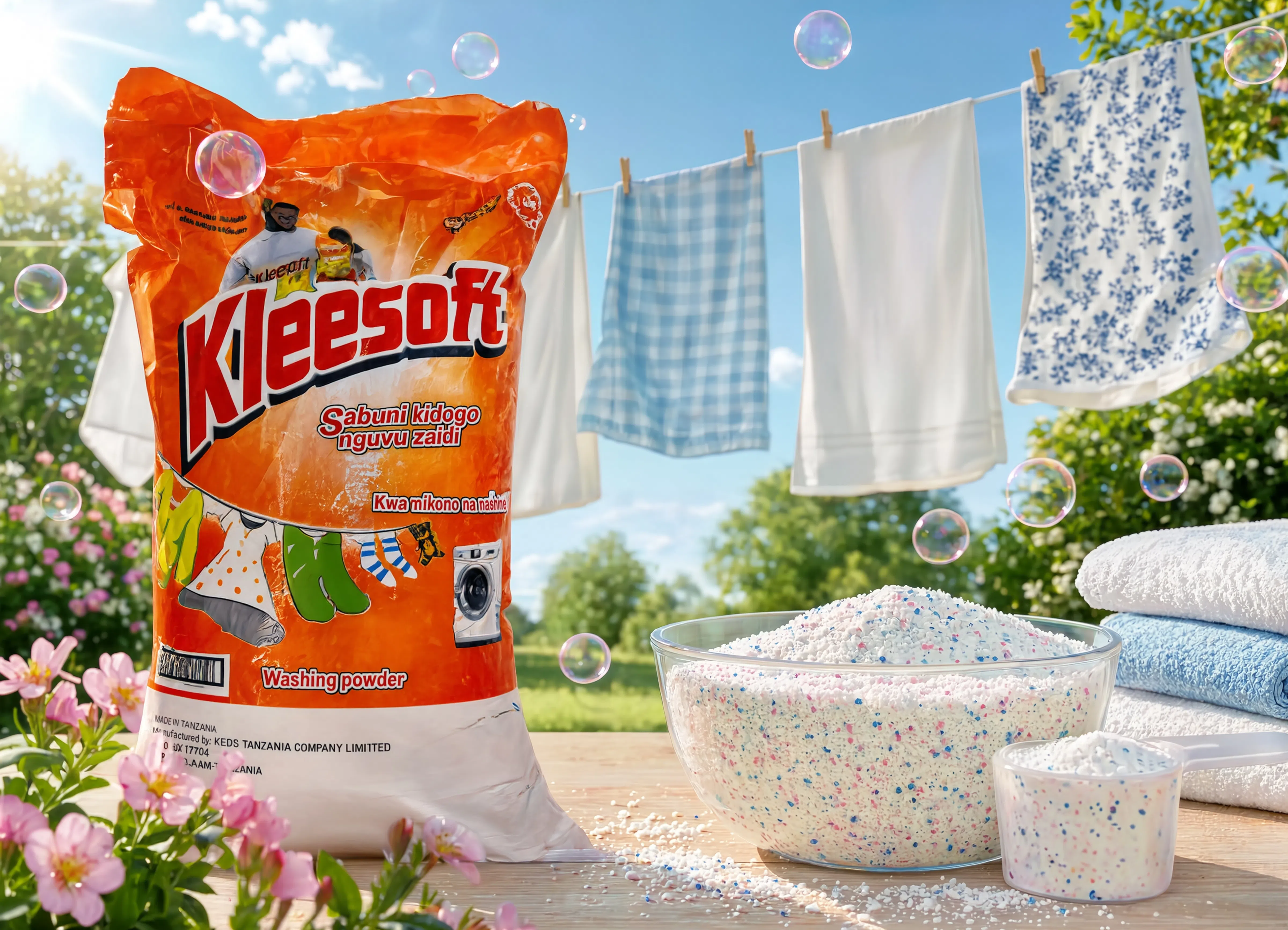
Tanzania: Registrar Applies the Anti-Dissection Rule in "MO CLEANSOFT" vs. "KLEESOFT" Trademark Opposition.
Tanzania: Registrar Applies the Anti-Dissection Rule in "MO CLEANSOFT" vs. "KLEESOFT" Trademark Opposition.
A trademark cannot escape a likelihood-of-confusion inquiry by being carved into pieces. In a Ruling delivered on 26 June 2026, the Deputy Registrar of Trade and Service Marks at the Business Registration and Licensing Agency (BRELA) refused registration of the trademark “MO CLEANSOFT” (and logo), Application No. TZ/T/2019/532 in Class 3, upholding an opposition brought by Guangzhou Sunda International Trading Company Limited, the registered proprietor of the trademark “KLEESOFT” in Tanzania. Our firm successfully represented the Opponent. The decision is a firm restatement of the anti-dissection rule and confirms that a disclaimed element of a mark remains fully relevant when assessing the likelihood of confusion.
Background
Royal Soap and Detergent Industries Limited (the Applicant), applied to register "MO CLEANSOFT" (and logo) in Class 3, covering detergents. The Opponent, whose "KLEESOFT" marks are registered in Tanzania in the same class, opposed the application under Section 20(1) of the Trade and Service Marks Act, Cap. 326, which prohibits the registration of a mark that so nearly resembles an existing registered mark for the same goods that its use is likely to deceive or cause confusion, contending that "MO CLEANSOFT" is visually and phonetically confusingly similar to "KLEESOFT" for identical goods marketed through comparable channels. The Applicant, on its part, maintained that its operative mark is "MO", a well-known mark in Tanzania, the descriptive phrase "CLEANSOFT" having been disclaimed at the Registrar's direction upon acceptance, and that no ordinary consumer could perceive any visual, aural, or conceptual similarity between the two marks.
The Registrar’s Determination
On the central question of confusing similarity, the Registrar held that dissecting the marks, for instance, by isolating the common element "SOFT" or the prefix "MO", would be a "mortal fault" and a contravention of the well-established principle that a trademark must be examined as a whole, upholding the anti-dissection rule articulated in Tiffany and Company v Wilmer Resources PTE Ltd., Civil Appeal No. 42 of 2023: competing marks must be considered in their entirety, not dismembered into their individual components. Applying BATA Limited (Canada) v BORA Industries Ltd., Commercial Case No. 76 of 2005, the Registrar reiterated that the likelihood of confusion must be judged in a common-sense way, having regard to the whole matter and to the visual and phonetic resemblances of the marks. The Registrar also had regard to the persuasive South African decision in iCollege (Pty) Ltd v Xpertease Skills Development and Mentoring CC [2023] ZASCA 70, which confirms that a disclaimed feature may still be weighed when evaluating similarity and the likelihood of confusion.
On that footing, the Registrar was satisfied that "MO CLEANSOFT" and "KLEESOFT", considered in their entirety, are visually and phonetically similar, and both marks relate to identical goods, detergents, falling within the same class. An average consumer exercising ordinary caution would therefore likely be confused or deceived into believing that the goods originate from the same source; the two marks are incapable of harmonious coexistence.
The opposition was accordingly found meritorious. Trademark "MO CLEANSOFT", Application No. TZ/T/2019/532 in Class 3, was refused registration, with the costs of the opposition borne by the Applicant. An aggrieved party may appeal to the High Court of Tanzania under Section 48 of the Trade and Service Marks Act, Cap. 326 R.E. 2023, and Regulation 96 of its attendant Regulations.
Key Implications
The anti-dissection rule is now firmly rooted in Tanzanian opposition practice. Competing marks are compared in their entirety. An applicant cannot narrow the contest to a favoured component of its composite mark; the mark as filed is the mark that is judged. Equally, prefixing a well-known house mark such as “MO” will not rescue a composite whole that remains confusingly close to an earlier registered mark for identical goods. Where the dominant impression of the whole resembles the earlier mark, the addition of a house mark will not tip the balance.
A disclaimer does not immunise a mark from a confusion analysis. The Applicant’s disclaimer of “CLEANSOFT” did not remove that element from the comparison. A disclaimed feature remains relevant when evaluating similarity and the likelihood of deception. Applicants should therefore not assume that disclaiming a descriptive element clears a path past an earlier mark that the composite whole still resembles; the disclaimer limits exclusivity in the element, not its weight in the comparison.
Phonetic similarity carries real weight in the marketplace. The Registrar accepted that “KLEESOFT” and “CLEANSOFT” sound almost identical in ordinary speech. In fast-moving consumer goods, where products are frequently requested by name over the counter, how a mark is heard can matter as much as how it is seen. Brand owners selecting new marks should test aural similarity against the register, not only visual appearance.
Conclusion
A trademark must be assessed in its entirety, and a disclaimer does not exclude an element from the comparison. A registered and genuinely used mark in Tanzania is a shield that works, while a cleverly constructed composite mark is no substitute for genuine distinctiveness. Whether you are clearing a new brand for launch, opposing a conflicting application, or enforcing your registered rights against imitation in the market, our Intellectual Property team is ready to assist. Contact us today to protect your brand.
Related Legal Updates

Tanzania: Fair Competition Commission Confirms the Acceptance of Foreign Trademark Certificates for Customs Recordation
The Fair Competition Commission (FCC) has confirmed that trademarks registered in foreign jurisdictions may be relied upon in support of applications for customs recordation in Mainland Tanzania, the law drawing no distinction between local and foreign certificates for that purpose. The Commission has at the same time drawn a firm line between recordation and enforcement, and has addressed the absence of a prescribed procedure for the renewal of recordation. Its position is set out in letter Ref. No. CB.64/301/104 dated 28th July 2026, and is of direct practical significance to brand owners who rely upon the recordation regime as part of their border enforcement strategy.

Tanzania: Proposed IP Law Reforms on ARIPO Recognition and Well-known Marks.
The Written Laws (Miscellaneous Amendments) Act, 2026 (Bill) proposes significant reforms to Tanzania's IP regime under the Trade and Service Marks Act (Cap. 326) and the Patents (Registration) Act (Cap. 217). On the trademark side, the Bill introduces recognition of ARIPO registrations designating Tanzania (new section 28A), statutory protection of well-known marks even without local business or goodwill (new section 19A), and express provision for collective and certification marks (sections 16A and 16B). On the patent side, it proposes ministerial power to temporarily exclude certain inventions from patentability for up to ten years, a 20-year patent term from the filing date, and extension of utility certificates from seven to ten years. If enacted, rights holders are advised to review their trademark and patent portfolios, their approach to ARIPO designations and well-known mark protection, and any pending filings that may be affected.